
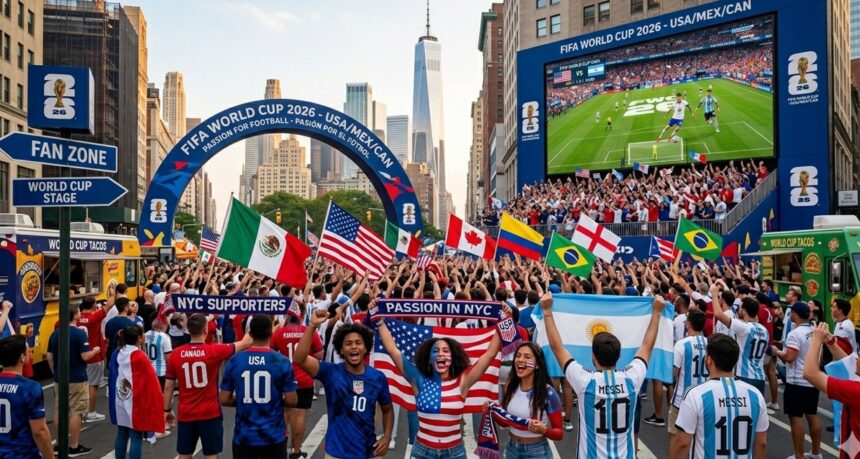
The beautiful game is returning to its grandest stage, and this time, it’s bigger, bolder, and more ambitious than ever before. The FIFA World Cup 2026, jointly hosted by the United States, Mexico, and Canada, is not just another tournament; it is a historical milestone that will redefine the landscape of international soccer. For the first time in history, 48 nations will compete for the ultimate prize, spanning 16 host cities across an entire continent.
As the countdown begins and the world turns its eyes toward North America, the excitement is palpable. From the high-altitude intensity of Mexico City to the cutting-edge arenas of the United States and the growing soccer passion in Canada, the 2026 edition promises a spectacle of unprecedented proportions.
The Grand Scale: 48 Teams and 104 Matches
The most significant change for 2026 is the expansion of the tournament format. FIFA has moved away from the traditional 32-team structure to welcome 48 nations. This expansion means more opportunities for emerging footballing nations from Africa, Asia, and the Americas to showcase their talent on the world stage.
With 104 matches scheduled over 39 days, the tournament will be a marathon of skill and endurance. The group stage will consist of 12 groups of four teams each, ensuring that the drama of the “final matchday” remains intact while introducing a new Round of 32 knockout stage. This format increases the stakes from the very first whistle, as even the third-placed teams in the groups will be fighting for a spot in the elimination rounds.
The Venues: 16 Cities, One Vision
The tournament will be played in some of the most iconic and technologically advanced stadiums in the world. The United States will host the lion’s share of the matches in 11 cities:
- East Coast: New York/New Jersey (MetLife Stadium), Philadelphia, Boston, Miami, and Atlanta.
- Central: Dallas, Houston, and Kansas City.
- West Coast: Los Angeles (SoFi Stadium), San Francisco Bay Area, and Seattle.
Mexico brings its rich footballing heritage with matches in Mexico City (Estadio Azteca), Guadalajara, and Monterrey. Meanwhile, Canada will host games in Toronto and Vancouver, marking a significant moment for the sport’s growth in the Great White North. The final is set to take place at the MetLife Stadium in New Jersey on July 19, 2026—a fitting stage for the climax of this continental odyssey.
Technological Revolution: AI and the Fan Experience
The 2026 World Cup will be the most “intelligent” tournament in history. FIFA has partnered with tech giants like Lenovo to implement Football AI Pro, a suite of innovations designed to assist teams with performance analysis and officiating.
Fans can expect:
- AI-Enabled 3D Avatars: These will provide more precise semi-automated offside technology, allowing for faster and clearer decisions.
- Immersive Broadcasting: For those unable to attend in person, “Shared Reality” venues and spatial computing will allow viewers to experience matches as if they were sitting on the pitch.
- Biometric Access: Facial recognition will be used for stadium entry and payments, streamlining the fan experience and enhancing security.
The Favorites: Who Will Lift the Trophy?
Predicting a World Cup winner is always a challenge, but as we look toward 2026, several powerhouses stand out as early favorites.
1. Argentina: The Defending Champions
Led by the legendary Lionel Messi—who has hinted at a potential appearance—the Albiceleste remains a formidable force. Their cohesive team spirit and the emergence of young stars like Julian Alvarez and Enzo Fernandez make them the team to beat.
2. France: The Powerhouse
With Kylian Mbappé at the peak of his powers, France is arguably the most talented squad in the world. Their depth is staggering, and after narrowly missing out in 2022, they will be hungry for redemption on North American soil.
3. Brazil: Seeking the Hexa
Brazil is always a favorite. With a mix of seasoned veterans and explosive talents like Vinícius Júnior and Rodrygo, the Seleção will be looking to end their trophy drought. The keys for Brazil will be defensive stability and finding a tactical balance under their latest management.
4. England: The Golden Generation 2.0
England’s squad is brimming with world-class talent, from Jude Bellingham to Bukayo Saka. Having consistently reached the latter stages of recent tournaments, the Three Lions are closer than ever to “bringing it home.”
5. The Dark Horses: USA and Morocco
Playing on home soil provides a massive advantage. The USMNT boasts a young, hungry roster playing in Europe’s top leagues. Meanwhile, Morocco, the darlings of the 2022 World Cup, continue to prove that they belong among the elite, with a tactical discipline that can frustrate any opponent.
The Economic and Cultural Impact
Beyond the pitch, the World Cup 2026 is expected to generate billions of dollars in economic activity. It serves as a platform for regional integration, showcasing North America as a unified logistics and tourism hub. For the host cities, the legacy will include improved infrastructure and a surge in grassroots participation in soccer.
Culturally, this tournament will be a melting pot. Fans from every corner of the globe will descend upon North America, creating a vibrant atmosphere of celebration and unity. The slogan “We Are 26” encapsulates this spirit—it’s not just a tournament for the players, but a global movement.
Conclusion
The FIFA World Cup 2026 is set to be a transformative event. With its expanded format, technological advancements, and the backdrop of three vibrant host nations, it will offer a footballing experience unlike any other. Whether it’s a veteran powerhouse reclaiming glory or a new champion emerging from the pack, one thing is certain: the world will be watching, and history will be made.